Choosing someone to guide your smile is a big decision, and credentials matter. You’ve probably seen the phrase “board-certified orthodontist” on websites, business cards and office walls. But what does it actually mean, and why should it matter to you or your family?
The short answer: board certification is a voluntary step that goes beyond the standard license to practice. It signals that an orthodontist has proven their knowledge and clinical judgment through written and clinical exams given by the American Board of Orthodontics (ABO).
What Does “Board Certified” Mean for an Orthodontist?
A board-certified orthodontist is a specialist who has voluntarily passed both written and clinical examinations administered by the American Board of Orthodontics (ABO). Once certified, they earn the title Diplomate of the American Board of Orthodontics, a credential that reflects demonstrated mastery of treatment planning, biomechanics and patient outcomes well beyond the baseline required for state licensure.
Here’s the part many people don’t realize: not every orthodontist is board certified. The ABO reports that board-certified orthodontists now make up a little over two-thirds of American Association of Orthodontists members. Everyone else is still a licensed specialist, but they haven’t chosen to pursue this additional credential.
The ABO was founded in 1929 as the first specialty board in dentistry and is recognized as the national certifying board for orthodontics. That history matters. It means the standards behind the title are consistent, rigorous and nationally respected.
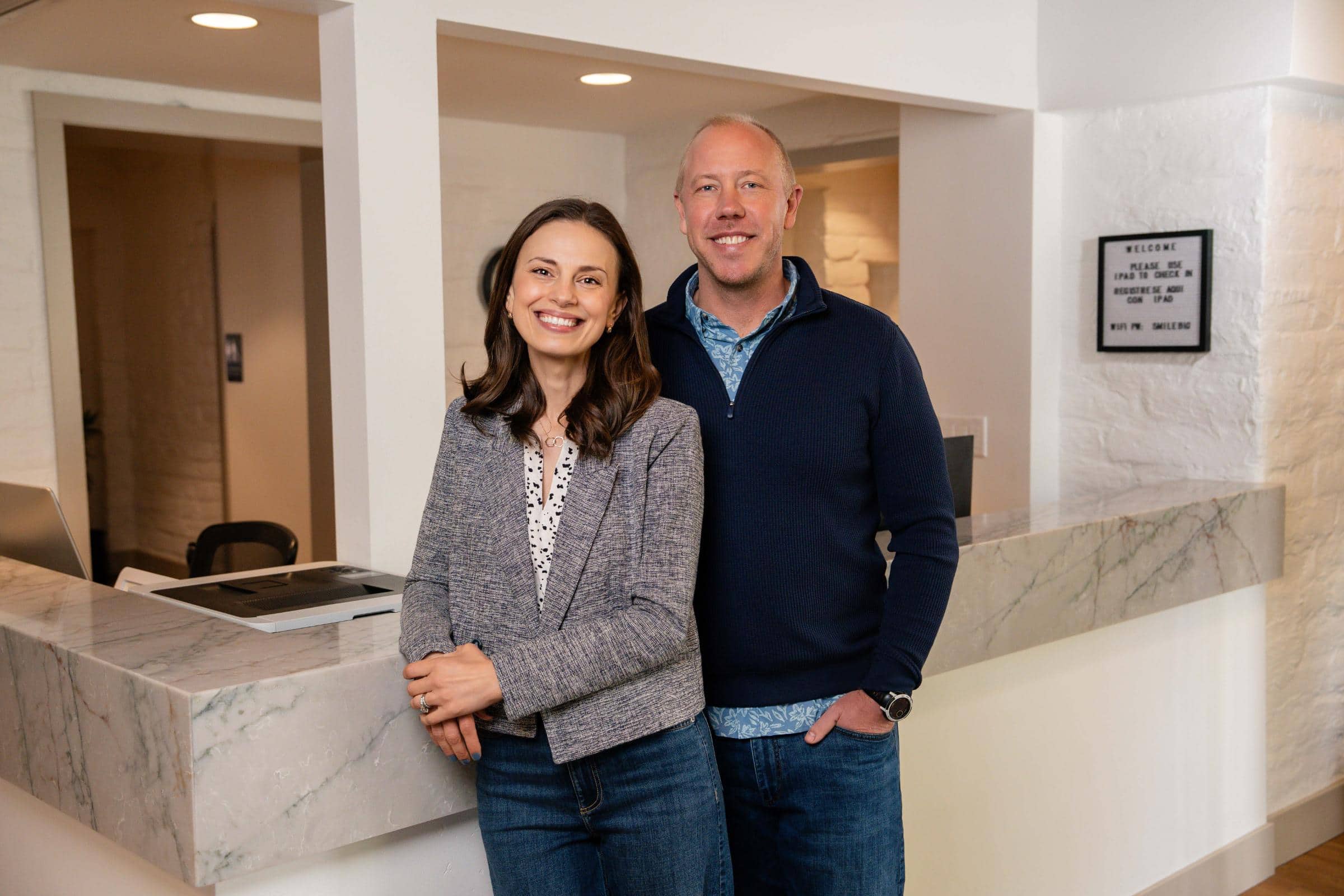
At North County Orthodontics, both Dr. Laura Pulver and Dr. Ross Pulver are board-certified orthodontists, so you get two board-certified specialists in one board-certified husband-and-wife team.
How the Board Certification Process Works
Becoming a Diplomate of the ABO isn’t a weekend course. It’s a multi-year process that stacks education, exams and clinical evaluation on top of each other. Here’s how it works, step by step.
- Earn a bachelor’s degree. Most candidates complete a four-year undergraduate degree with a heavy science focus before applying to dental school.
- Graduate from dental school. Next comes a Doctor of Dental Surgery (DDS) or Doctor of Dental Medicine (DMD) degree, which typically takes another four years.
- Complete a CODA-accredited orthodontic residency. After dental school, future orthodontists spend an additional two to three years in a specialty residency accredited by the Commission on Dental Accreditation (CODA). This is where general dentists become orthodontists.
- Pass the ABO Written Examination. This test covers the full scope of orthodontic science, including growth and development, biomechanics and treatment planning.
- Pass the ABO Clinical Examination. Candidates are tested on how they diagnose, plan and manage real-world patient scenarios.
- Renew every 10 years. Certification isn’t a one-and-done event. Diplomates renew their credential on a 10-year cycle to stay current with evolving research and techniques.
Dr. Laura and Dr. Ross each completed this pathway. That’s the difference between “licensed to practice” and “board-certified.”
Benefits of Choosing a Board-Certified Orthodontist
So what do you actually get when you choose a board-certified orthodontist? The benefits show up in how your treatment is planned, delivered and finished.
- Independently validated expertise. Board certification means ABO examiners have evaluated the orthodontist’s clinical judgment against a national standard. That’s a level of accountability you can’t get from a license alone.
- Commitment to ongoing learning. Diplomates renew every 10 years, which encourages continuing education, current research and updated techniques.
- Attention to the details that matter. The clinical exam asks orthodontists to think critically about tooth position, bite function, facial balance and long-term stability.
- Added confidence for complex cases. Growing kiddos, teens with crowding, adults with worn bites and anyone considering MARPE or a palatal expander deserve a provider who has shown they can handle complexity.
Because North County Orthodontics has two board-certified orthodontists under one roof, you can feel confident in the training behind your custom plan.
Board-Certified vs. Non-Board-Certified Orthodontists
Here’s where things get nuanced. Every orthodontist in the U.S. has completed dental school and a specialty residency, so all of them are qualified to provide orthodontic care. Board certification is an extra, voluntary step on top of that foundation.
Many excellent, non-certified orthodontists provide quality treatment every day. The distinction is about whether the provider has chosen to have their clinical judgment evaluated against a national standard.
| Credential Feature | Board-Certified Orthodontist | Non-Board-Certified Orthodontist |
|---|---|---|
| State dental license | Required | Required |
| CODA-accredited residency | Required | Required |
| ABO Written Exam | Passed | Not required |
| ABO Clinical Exam | Passed | Not required |
| Renewal every 10 years | Required | Not applicable |
| Title “Diplomate of the ABO” | Yes | No |
The takeaway: a non-certified orthodontist may be a perfectly skilled provider, but a board-certified orthodontist has documented that skill through independent review. When you’re comparing options, this is one concrete way to measure commitment to the specialty.
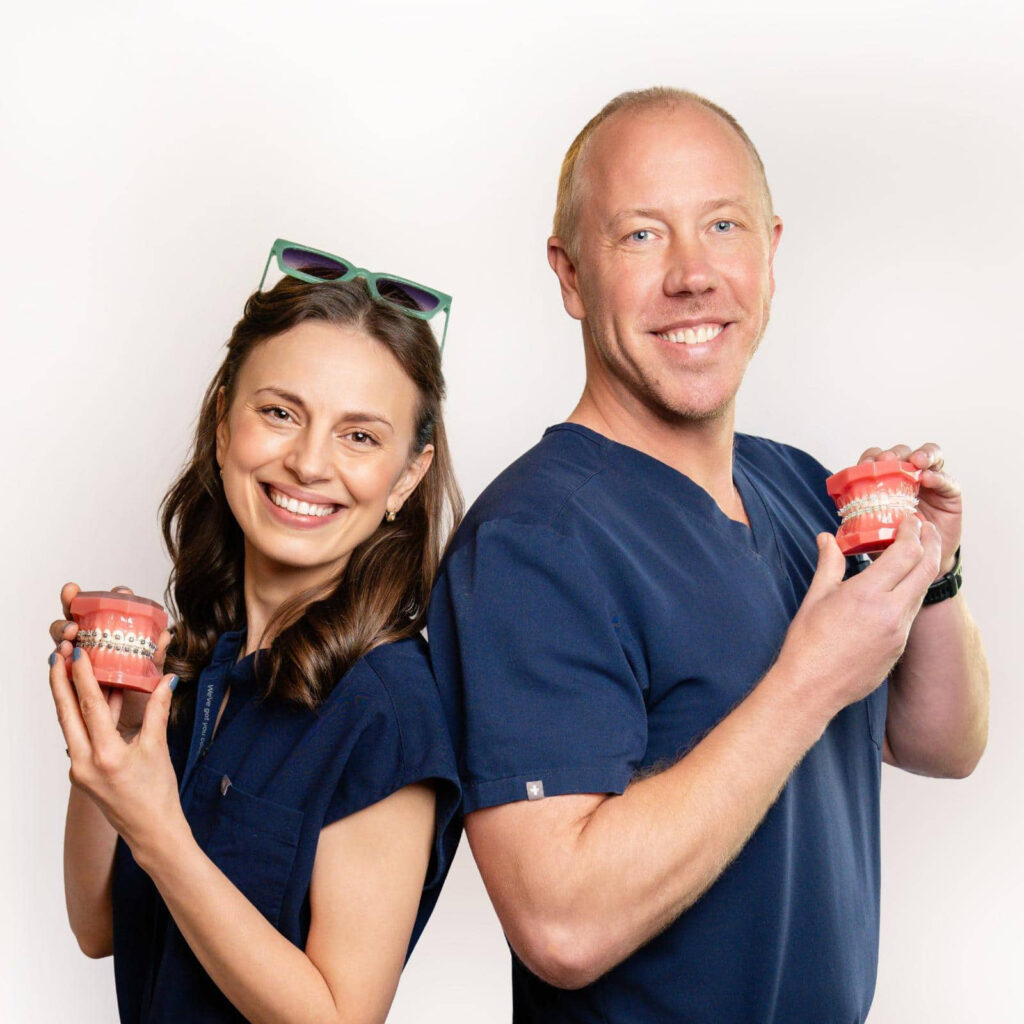
Dr. Laura and Dr. Ross are both Diplomates of the American Board of Orthodontics.
Does Board Certification Affect Treatment Cost?
A fair question: does choosing a board-certified orthodontist cost more? Not directly. What drives the price of orthodontic care is the complexity of your case, the type of treatment you choose, how long treatment takes and the technology involved.
For example, Spark clear aligners, Damon Ultima metal braces and LightForce clear braces each have different price points based on materials and lab work. A straightforward alignment case typically costs less than a case involving a palatal expander or MARPE.
The real value of board certification isn’t in the sticker price. It’s in the quality of the outcome, the efficiency of treatment and the confidence you have in your provider.
At North County Orthodontics, we make cost easy to understand. Your free consult includes a same-day smile plan with a clear breakdown of costs, and we offer an in-house 0% payment plan to help you spread treatment out comfortably. For more on what shapes the price, see our guide on how much braces cost.
How to Verify and Choose a Board-Certified Orthodontist
If board certification matters to you, here’s how to confirm it and what to look for during your search.
- Use the ABO Orthodontist Locator. The American Board of Orthodontics maintains a public search at americanboardortho.com where you can verify Diplomate status in seconds.
- Ask directly. A simple question works: “Are you a Diplomate of the American Board of Orthodontics?” A certified provider will say yes without hesitation.
- Confirm CODA-accredited residency training. All orthodontists should have completed a residency accredited by the Commission on Dental Accreditation.
- Review credentials and experience. Look at where they trained, how long they’ve practiced and what technology they use.
- Read patient reviews. Real feedback from kids, teens and adults tells you a lot about chairside manner and results.
- Bring questions to your consultation. Ask about treatment options, timeline, pricing and what happens if your plan needs to change.
At North County Orthodontics, your free consult is the place to ask these questions. Dr. Laura and Dr. Ross will walk you through everything, no pressure, no sales pitch, just answers.
Frequently Asked Questions
Are all orthodontists board certified?
No. The ABO reports that a little over two-thirds of American Association of Orthodontists members are board certified, so not every orthodontist holds the credential. Every orthodontist has completed dental school and a specialty residency, but certification is a voluntary step that requires additional exams.
Is it bad if an orthodontist isn’t board certified?
Not necessarily. Many skilled orthodontists provide excellent care without being board certified. Certification adds an extra layer of assurance that the provider has had their clinical work independently evaluated, but it isn’t the only marker of quality. Experience, training, patient reviews and technology all matter too.
How often do you visit the orthodontist during treatment?
Most patients come in every 4 to 8 weeks during active treatment, though schedules vary based on the type of care. With DentalMonitoring, some of our patients can check in virtually between visits, which cuts down on in-office trips.
Is orthodontics surgery?
No. Orthodontists are dental specialists who focus on tooth movement, bite correction and jaw development using appliances like braces, Spark aligners, palatal expanders and MARPE. They are not surgeons, though in rare complex cases they may coordinate care with an oral surgeon.
Can a general dentist be board certified in orthodontics?
No. Only providers who have completed a CODA-accredited orthodontic residency are eligible to sit for ABO certification. A general dentist, no matter how experienced, cannot earn the Diplomate credential without completing specialty training first.
How often must orthodontists recertify?
Every 10 years. The ABO requires Diplomates to renew their certification to maintain their status, which keeps board-certified orthodontists accountable to current standards and research throughout their careers.
Meet Two Board-Certified Orthodontists in One Place
When you’re choosing care for yourself or your kiddos, it helps to know exactly who’s behind the chair. At North County Orthodontics, Dr. Laura and Dr. Ross are a board-certified husband-and-wife team who share a commitment to careful planning, smooth treatment and results you’ll want to show off.
Ready to see what your smile could look like? Book your free consult at our Atascadero office at 4555 El Camino Real, Suite B, or our Paso Robles office at 614 13th Street. Call (805) 238-2632 today, and let’s help you love your smile!